Squad craft · Matchday discipline

BatBall11 fantasy cricket team-building and captain workflow guide

Here we focus on how you think about a fantasy XI: credit spread, role coverage, and captain risk—separate from whether a button is well placed. Screen-level UX lives on the app workflow tour; operator trust signals sit in the review notebook; brand-to-brand drills belong on the alternatives matrix.

BatBall11 fantasy cricket team building dashboard

Building a balanced lineup under salary pressure

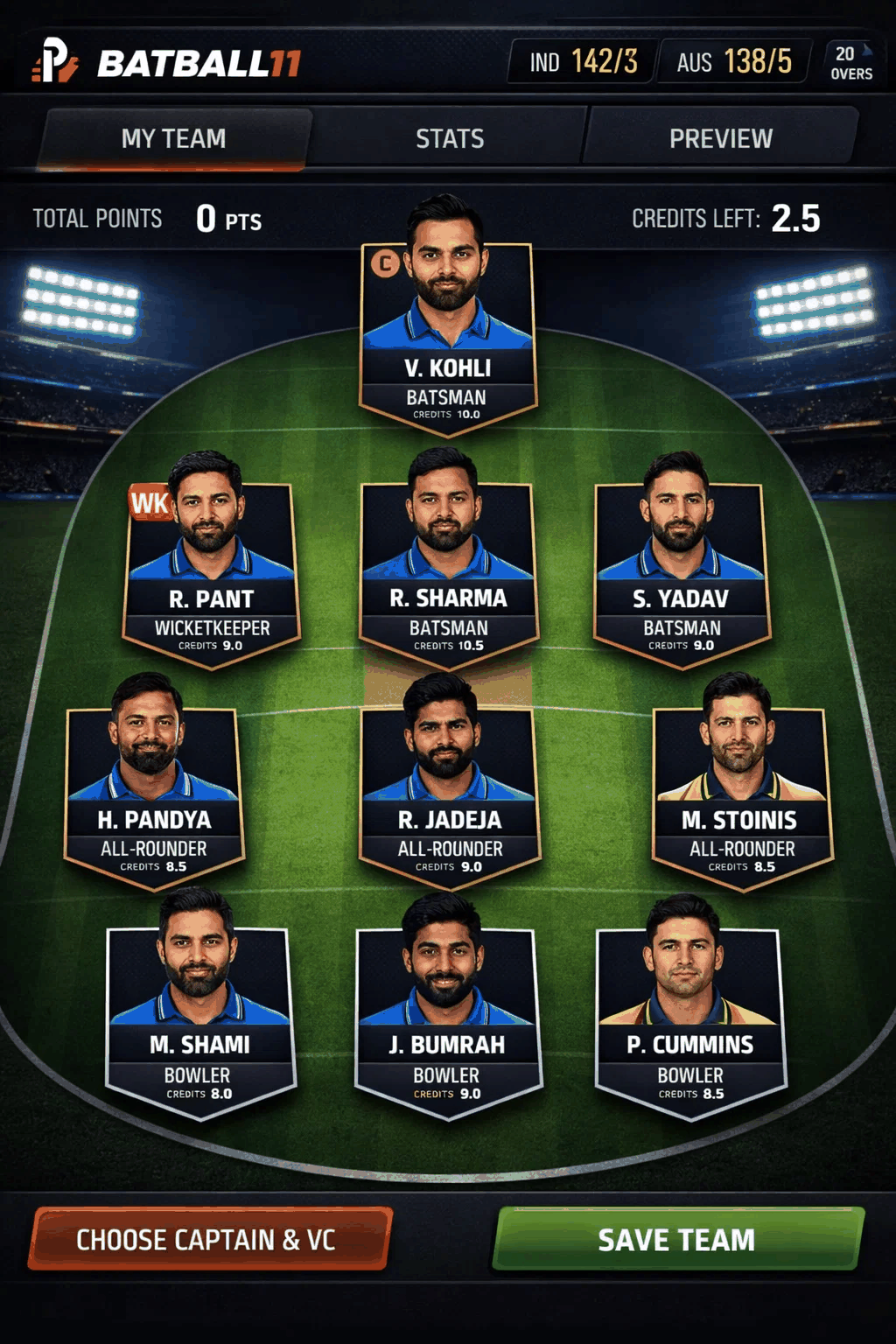
Most winning habits start with a floor: enough top-order exposure to survive a collapse, plus at least one bowling lane that thrives in the second innings if the format rewards it. The app’s squad screen shows whether salary and role filters keep that story visible while you trim. Chasing six “gut” punts in one XI rarely survives a bad toss; anchor one or two picks to credits you would play even on a neutral pitch.

Captain and vice-captain logic

Captain risk budget

Use the multiplier on a player whose failure mode you can explain—form dip, not random benching. If the story needs three caveats, downgrade to vice-captain and promote stability to the armband. How quickly you can flip that choice is a workflow question; the risk story itself stays here.

Vice as insurance

Vice should survive a modest surprise: all-rounder moving down the order, or opener facing swing for two overs then cashing later. Pair vice with captain so they are not perfectly correlated busts. When you repeat the same discipline on rival apps, log differences beside alternatives scoring.

Toss-time adjustments

After the toss, trim punts that depended on the wrong chase/defend narrative. Bowlers who only shine when ahead on the scoreboard may need swapping for hit-the-deck options if dew or short boundaries flip the plan. Whatever the app allows before lock, rehearse the swap mentally during the anthem break so you are not inventing logic at T-60 seconds—then compare that freedom with rows on the alternatives page.

Role balance, not sticker collecting

Wicketkeeper scarcity, all-rounder flexibility, and death bowlers each solve different phases. If your squad is five premium batters and thin bowling, you are betting on a shootout—fine if deliberate, brittle if accidental. Name the phase you are overweighting before you lock, and note whether rules and receipts in-app make that bet legible after the match.

Fast edits before lock

Queue two swap candidates when the XI drops: one like-for-like role swap, one structural change (extra seamer vs spinner). If the UI buries salary remaining during that scramble, note it as product friction on the workflow page, not as a strategy failure.

How this differs from the app review page

The review notebook tracks honesty of rules, support, and receipts. This page stays inside the contest: picks, timing, and risk. For brand-to-brand lineup speed, run the same drills on the alternatives matrix.

Compare workflow discipline across apps

When you test rivals, hold the contest type and salary rules constant. If another app gives clearer “last edited” timestamps or safer undo, park that on the alternatives matrix and cross-check BatBall11 workflow plus review notes on support honesty—not as a slogan, as a dated line you can re-verify next season.